Checkpoint Dating: How Three Dates Became America's Unofficial Vetting System
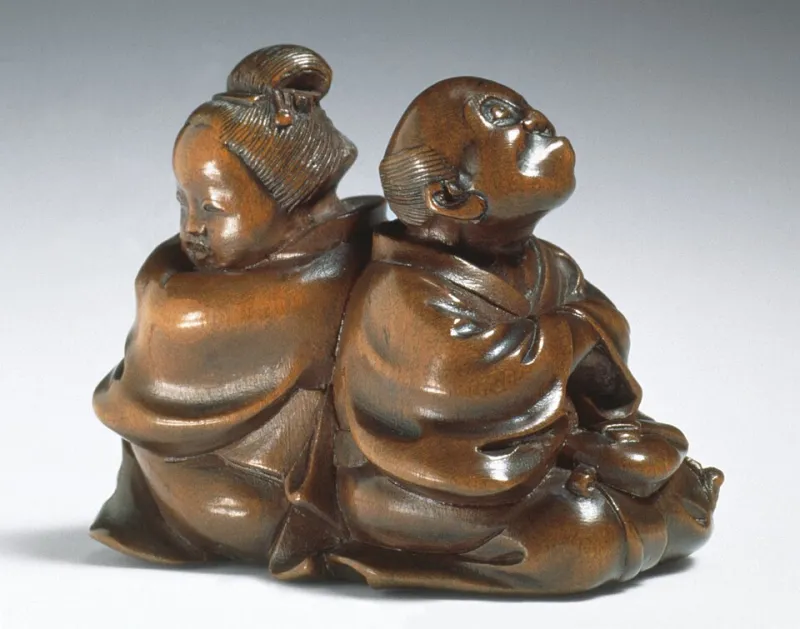
Photo: Meikeisai Hōjitsu (Japan, died 1872), Public domain, via Wikimedia Commons
Somewhere between the second cocktail and the drive home, you've already made a decision. You might not admit it out loud — not even to your group chat — but by date three, most of us have quietly filed someone under promising, casual only, or absolutely not.
Welcome to checkpoint dating: the unwritten system of invisible milestones Americans use to sort potential partners long before we actually know them. The third date means something. Meeting the friends means something more. The first weekend away? That's practically a thesis defense.
But here's the uncomfortable question: who made these rules, and are they working for us at all?
The Three-Date Rule Isn't a Rule — It's a Shortcut
Ask around and you'll get wildly different explanations for why date three matters. Some trace it to old-school dating etiquette. Others picked it up from sitcoms, a roommate, or that one friend who swears she knew about her now-husband after ninety minutes.
The truth is less romantic: it's a cognitive shortcut. Research on impression formation suggests we form surprisingly durable first impressions within seconds of meeting someone — and everything after that gets filtered through that initial snapshot. By the third date, we're not really learning about someone anymore. We're confirming what we already decided.
That's efficient, sure. It's also how perfectly good love stories get cancelled before the pilot airs.
The Milestone Industrial Complex
Think about how many checkpoints we've invented:
- The third date — the official 'is this going somewhere?' evaluation
- Meeting the friends — the peer review stage
- The first 'I love you' — the emotional commitment threshold
- The first weekend trip — the compatibility stress test
- Meeting the family — the final approval stamp
None of these are on any official calendar. Yet we treat them like invisible gates, and passing or failing one can end a relationship that never got a real chance to breathe.
The problem isn't having standards. It's confusing milestones with knowledge. You don't actually know how someone handles conflict, money stress, or a bad year at work from three dinners. You know how they behave on three dinners — which is, for most people, their best possible performance.
What Snap Judgments Get Wrong
Here's the twist: research on long-term relationship satisfaction consistently shows that the traits people think predict compatibility — chemistry, shared hobbies, how good the banter is — are weaker predictors than the boring stuff. Kindness under pressure. Emotional regulation. Whether someone can apologize without a lawyer present.
And you cannot assess any of that on a timeline. Some people take months to show their real selves. Some of the best relationships started with a disastrous first date. Meanwhile, plenty of three-date slam dunks fizzle by month four.
In other words: your internal vetting system might be screening for the wrong job.
How to Loosen the Checkpoints Without Losing Your Standards
You don't have to abandon your instincts — just upgrade them.
Swap milestones for questions. Instead of 'it's date three, do I feel it?', ask 'have I learned anything real about how this person treats people when things go wrong?' The waiter test — how they talk to service staff — tells you more than any anniversary.
Give slow burns a fair trial. If someone checks your boxes but doesn't give you instant fireworks, that's not a red flag. Anxiety and excitement are chemically indistinguishable, which is why 'butterflies' sometimes just means your nervous system is on high alert. Comfort can be the actual green flag.
Notice when you're judging the pace, not the person. A lot of checkpoint anxiety is really about us — where we thought we'd be by 30, what our friends are doing, what our mom keeps hinting at. That's not data about your date. That's noise.
Revisit your verdicts. If you've written someone off, ask why. 'The vibe was off' is a feeling, not a finding. Sometimes it's wisdom. Sometimes it's just a bad playlist at the bar.
The Bottom Line
Milestones exist because dating is overwhelming and our brains want maps. Fair enough. But love isn't a checkpoint race, and the people who end up in the good relationships are usually the ones who let a great person be weird, unpolished, and unimpressive on date three.
The third date isn't a verdict. It's a data point. Treat it like one, and you might be surprised who makes the cut.