Your Relationship Isn't Broken — Instagram Just Made You Think It Is

The Scroll That Started the Doubt
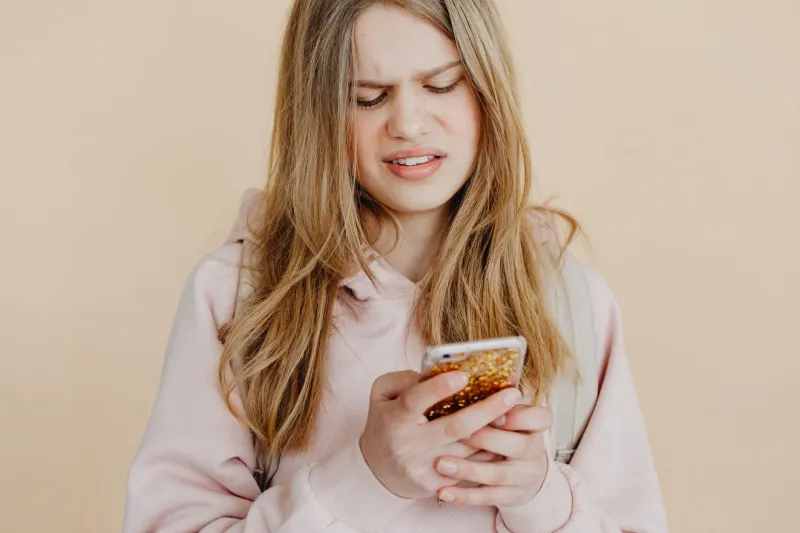
It usually happens on a Tuesday night. You're curled up on the couch, your partner is half-watching TV, nobody's said anything particularly romantic in a while, and then — there it is. A couple on your Instagram feed slow-dancing in their kitchen, candles everywhere, matching grins like they just fell in love five minutes ago. And suddenly, without even meaning to, you're wondering: Why don't we do stuff like that?
Welcome to the comparison trap. It's one of the sneakiest relationship killers out there, and it doesn't announce itself. It just quietly plants a seed of doubt in what might otherwise be a genuinely good thing.
The truth? Most couples doing the comparing are actually doing just fine. It's the content — not their connection — that's broken.
What You're Really Looking At When You Scroll
Let's be real about what social media actually shows us. Platforms like Instagram and TikTok are built around engagement, and nothing drives engagement quite like aspirational content. Couples who post about their relationships aren't sharing the Tuesday-night-nothing moments. They're sharing the anniversary trip, the surprise flowers, the aesthetic coffee-shop dates.
Researchers at the University of Michigan found that spending more time on social media is consistently linked to lower life satisfaction — and that effect is largely driven by social comparison. When every relationship you see online looks effortless and electric, your own starts to feel dull by contrast, even when it's genuinely healthy.
Celebrity culture piles on too. Whether it's a power couple walking a red carpet or a reality TV romance that somehow survives every dramatic twist, we're constantly fed a version of love that's been produced, lit, and edited for maximum impact. Real relationships — the kind built on shared grocery runs and inside jokes and knowing someone's worst moods — simply can't compete with that kind of theater.
The Psychology Behind Why We Fall for It
Humans are wired to compare. It's called social comparison theory, and psychologist Leon Festinger identified it back in the 1950s. We naturally evaluate ourselves by looking at others — it's how we gauge where we stand. The problem is that this instinct evolved long before the internet handed us a 24/7 feed of curated perfection to compare ourselves against.
When we see something that looks better than what we have, our brains register it as a gap. And gaps feel like problems that need solving. So we start picking apart our relationships, searching for the missing piece that would make us look more like that couple. We start treating a normal, stable partnership like a renovation project.
Here's the kicker: studies show that couples who frequently compare their relationships to others report lower satisfaction, even when objective measures of their relationship quality are high. In other words, the comparing itself is what makes things feel off — not the actual relationship.
What Healthy Relationships Actually Look Like (Spoiler: Not That)
Dr. John Gottman, one of the most respected relationship researchers in the country, has spent decades studying what makes couples last. His findings are pretty unglamorous. Successful long-term relationships are characterized by things like mutual respect, the ability to repair after conflict, and a general ratio of positive to negative interactions — not grand gestures or constant passion.
Healthy couples argue. They have boring stretches. They forget to be romantic sometimes. They go through phases where life feels more logistical than loving. None of that makes it on a couple's Instagram page, but all of it is completely normal.
In fact, research published in the Journal of Personality and Social Psychology suggests that the couples who idealize their partners too heavily early on often struggle more when reality inevitably sets in. A little realism, it turns out, is actually protective.
So if your relationship looks nothing like a rom-com montage right now — good. That might mean it's the real thing.
How to Break the Comparison Cycle
Knowing the trap exists doesn't automatically keep you out of it. Here are some ways to actively recalibrate:
Audit your feed. This sounds basic, but it works. If certain accounts consistently make you feel like your relationship is lacking, unfollow them. You're not being petty — you're being intentional about what you let shape your expectations.
Name what you actually have. When comparison creeps in, counter it with specifics. Not vague reassurances, but actual moments. The way your partner remembered that thing you mentioned three weeks ago. The way they handle a hard day. The shorthand you've built together. Specificity is the antidote to the generic glow of someone else's highlight reel.
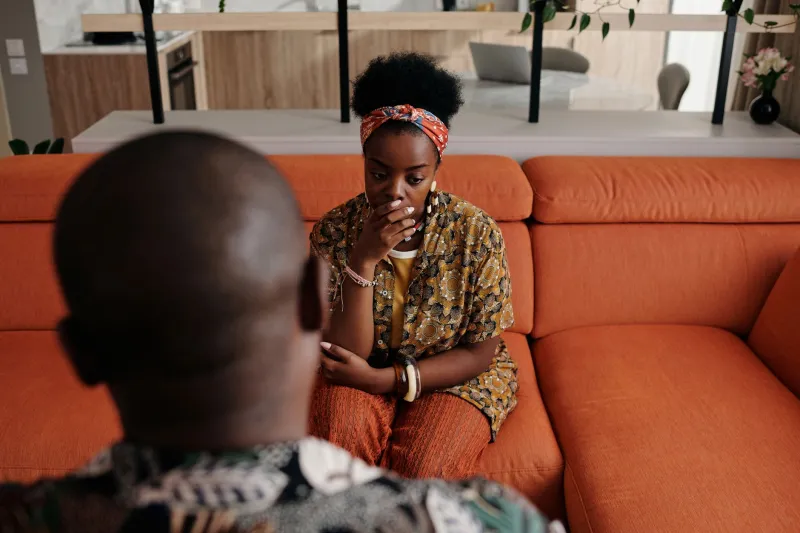
Talk about it — out loud. If you've been quietly measuring your relationship against some external standard, say so. Not as an accusation, but as a conversation. Chances are your partner has done the same thing at some point. Naming it together takes away a lot of its power.
Create your own moments — on your own terms. One reason other couples' content looks so appealing is that it's intentional. They planned something, captured it, shared it. You don't need to post anything, but being intentional about creating good moments in your relationship — whatever that looks like for you two — builds a real archive of your own to draw from.
Remember the edit. Every time you feel that pang of comparison, remind yourself: you're watching a director's cut. You're seeing the best 30 seconds of someone else's week, maybe month. You don't see the argument they had before the slow-dance. You don't see the tension that got cropped out of the frame.
Your Relationship Deserves a Fair Witness
The most dangerous thing about the comparison trap isn't that it makes us want more — it's that it makes us undervalue what's already there. Couples quietly thriving in real, imperfect, deeply human relationships start treating their partnerships like problems to fix instead of connections to appreciate.
If you've been scrolling and doubting, here's a challenge: put the phone down for a minute and actually look at your relationship. Not through the lens of what it's missing, but through the lens of what it is. The comfort, the history, the specific, unrepeatable thing you've built with another person.
That's not content. That's connection. And no algorithm can produce it.
Rom Reactor's whole thing is that love is worth paying attention to — the real kind, not the filtered kind. And the real kind? It's usually a lot better than you've been giving it credit for.